Wednesday, July 18, 2012
The Google Experience Opinion
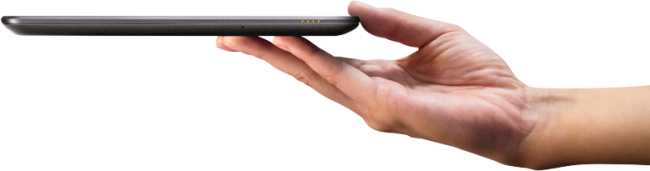
With the release of the Nexus 7, Google set its sights on Amazon to try and reclaim control of the Android tablet space. Ever since Amazon forked Android for the Kindle Fire there has been some confusion about what OEM software customization means. There seems to be some confusion in the industry about what TouchWiz and Sense really are. More and more often I have seen articles arguing that the Galaxy S III and the Kindle Fire offer the same non-Google experience. Even more shocking, I've heard arguments that AOSP is Android and the Nexus line of phones offers the "Google experience." The question isn't whether or not OEMs offer a Google experience (they do); the question is if they'll keep a Google experience.
The idea of "Google experience" devices has existed for a long time. Early android devices that provided a sanctioned Google experience were labeled on the back of the device with the phrase "with Google." In time, this label disappeared, but the notion that some devices offered an explicitly sanctioned experience by Google did not. In fact, the mess that Google, Motorola, and Samsung encountered with the Skyhook lawsuit revealed much more about the approval process for Android devices than any of the companies involved probably intended. From that litigation we learned that every Google device has to receive approval directly from Google before it can be sold with Google apps. In other words, Google has the power to reject devices if they want to. While the approval process may seem like nothing more than a formality, the Skyhook litigation demonstrated that Google has more intentions than simply letting any Android device get sold with Google apps. Because Samsung and Motorola tried to use Skyhook for GPS data instead of Google's own location data, some Android devices were delayed while others had major GPS issues. Google also had to give special approval for the original Galaxy Tab to be shipped with Google apps because Google did not want tablets to run any version of Android (Honeycomb wasn't out, yet).
When Amazon launched the Kindle Fire, and even before that the Amazon Appstore, Amazon set out to create their own experience with Android apart from Google. Their separate experience was more than just a skin on top of Android; it was a fork. Amazon took Android 2.3 and made something totally different for the Amazon Kindle Fire (much like the ill-fated Grid 10 and Grid 4 from Fusion Garage). With their own app store, media distribution, and hardware, Amazon was able to release a product that was completely removed from the Google experience. To try and compare what Amazon did with what Samsung is doing with the Galaxy S III is asinine. While Samsung offers movies and music, Samsung does not have their own app store.
